QSR in India: The Growth Story Shaping the Future of Food
2026-07-07
10 Mins Read Mins Read
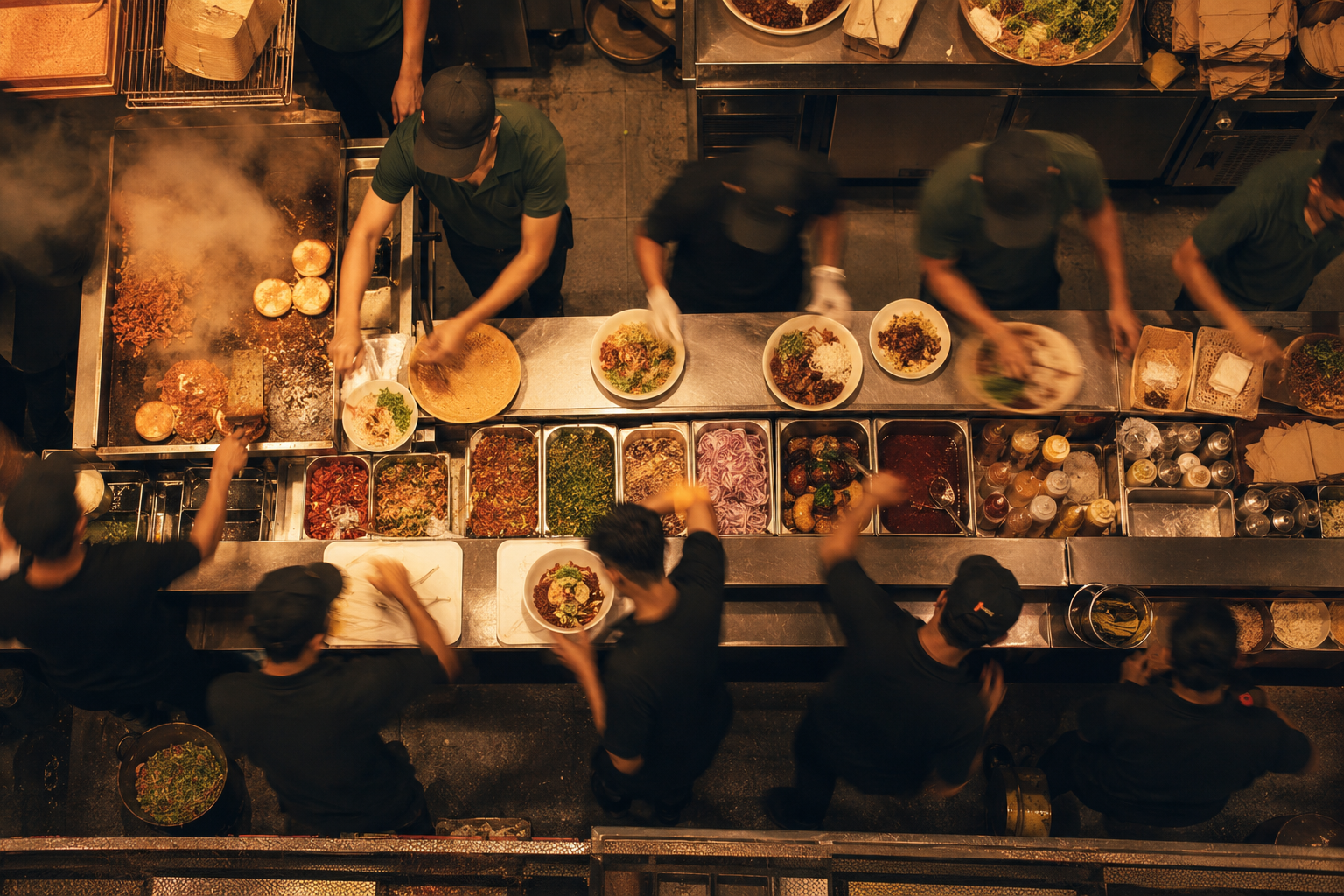
Why QSR is the format everyone is watching
The QSR in India is the fastest-scaling format in the country's food business - and it is quietly rewriting how India eats. Market trackers put the India quick-service restaurant market at roughly USD 30.37 billion in 2026, on its way to about USD 47.28 billion by 2031 at a 9.26% CAGR, according to Mordor Intelligence.
That is the headline every restaurateur has already seen. Here is the part most of them miss: growth and profit are not the same thing.
We have spent 11+ years and 550+ F&B projects across 32 Indian cities and 8 countries watching both numbers at once. The market is expanding. Many individual outlets are still bleeding. This blog breaks down why QSRs are becoming the future of food in India - and what actually separates the ones that scale from the ones that stall.
How big is the QSR opportunity in India right now?
QSR is already the largest slice of India's restaurant industry, and the runway ahead is enormous. India has fewer than one QSR store per million people, against 40-plus in the United States. That gap alone is why analysts keep calling the growth math compelling even in slow years.
A few numbers that frame the size of it:
1. The India QSR market sits near USD 30.37 billion in 2026 and is forecast to reach USD 47.28 billion by 2031 (Mordor Intelligence).
2. Delivery is outrunning dine-in, growing at roughly 10-12% CAGR through 2031 - faster than any other channel.
3. Digital is now the default. Jubilant FoodWorks reported that around 70% of Domino's India orders in Q2 FY25 came through digital channels.
The format is affordable, repeatable and delivery-ready. That combination is exactly why capital keeps flowing into it.
Why are QSRs becoming the future of India's food business?
QSRs are becoming the future of Indian food because every structural trend in the country points the same way - young, urban, digital and time-poor. These are the tailwinds we see behind almost every new brief that lands on our desk:
A young, aspirational consumer. India's under-35 majority is comfortable eating out, ordering in and trying new formats. A 2024 IIM Bangalore study found 68% of Gen Z respondents discovered new QSR outlets through social media, and more than half decided to buy within 24 hours of seeing a food video. The consideration cycle has collapsed from weeks to hours.
Urbanisation runway. India is only about 36% urban, against China's 68%. QSR economics reward density, and India's is still climbing. More cities, more office hubs, more high-street footfall - all of it feeds the format.
Delivery and digital rails. Swiggy, Zomato and now quick-commerce players have handed QSRs a distribution network no earlier generation of restaurants had. A brand can reach thousands of homes without a single extra chair.
Tier 2 and Tier 3 demand. The next wave of growth is not in metros. It is in smaller cities where aspiration is rising and organised competition is thin. That is where a lot of the store-count expansion is now aimed.
A shift from snack to meal. QSR in India was historically a 4 PM to 7 PM snack habit. Brands are re-engineering that - rice bowls, full-meal combos, biryani buckets - to win dinner. When burgers and fried chicken become dinner, the addressable market triples.
A franchise-friendly format. Standardised menus, compact kitchens and clear SOPs make QSR the easiest format to replicate - which is why it pulls in franchise investors and new-age capital. It is also the hardest part to get right. When we built the franchise model and central-kitchen SOPs for Yewale Amruttulya, the tea QSR that now runs 700+ outlets, the outlets were only the visible part; the replication system underneath them was the real product.
Put together, these are not passing trends. They are the base on which the next decade of Indian food gets built.
But is the QSR boom actually profitable?
This is where the story gets honest: the QSR market is growing fast, but most listed players struggled to make money in FY25. The top five listed QSR companies in India reported an average Return on Equity of about -2.8% and Return on Capital Employed near 5.7% in FY25, per analysis from Dezerv. Only Jubilant FoodWorks cleared double digits on both.
Why does a booming market produce weak returns? Because the cost structure is unforgiving:
1. Rent and staff can eat 25-30% of store-level revenue. QSR is built for volume, so when footfall dips, that fixed cost turns into a liability fast.
2. Franchisees of global brands pay 3-8% of sales as royalty and marketing fees - charged on sales, not profit.
3. Aggressive store openings pile on depreciation before new outlets mature, dragging the whole P&L in a soft demand cycle.
The market noticed. Same-store sales went negative across much of the sector for nearly two years. Restaurant Brands Asia (Burger King India) posted -3.0% same-store sales in Q2 FY25 even as revenue grew 8.5% - the classic red flag of expansion masking weak per-store performance. By FY26, chains had pulled new store openings down to a multi-year low and openly shifted the conversation from opening stores to earning profit.
That pivot is the whole game. The growth is real; the gap between a growing brand and a profitable one is where the work happens. When we took on WOFL, a dessert and waffle brand in Dubai, the fix was not a bigger marketing push - it was recommending they shut one high-rent location and rebuild product consistency. Store-level EBITDA moved from -5% to +15% in six months. Fewer outlets, more profit.
What separates QSRs that scale from those that stall?
The QSRs that win the next decade are the ones built as systems, not just brands. Store count follows unit economics - never the other way around. There is a line we keep coming back to: brands are built on strategy; execution alone just runs the shop. This is the stack we build with QSR clients.
Unit economics first. A single hot outlet proves nothing. What matters is store-level EBITDA, payback period and average daily sales that hold up once the launch buzz fades. Domino's India's mature-store ADS of about ₹80,185 in Q2 FY25 is what a healthy, mature pizza store looks like - a benchmark, not a starting point. One rule we plan around for every new build: hold 11 months of running capital, because most food businesses take 6-12 months to break even and the ones that die usually die of cash, not concept.
Menu as financial architecture. Every SKU needs a job: hero products, high-margin defenders, entry items and combos that lift order value. Localised, made-for-India products also protect margin - Burger King's localised SKUs reportedly carry gross margins around 40% higher than imported recipes. The lever cuts both ways: at Sanata Snacks in Mumbai, removing non-performing menu items and tightening the kitchen cut food cost by 16% in eight months and pulled order pickup time from 15 minutes to 5.
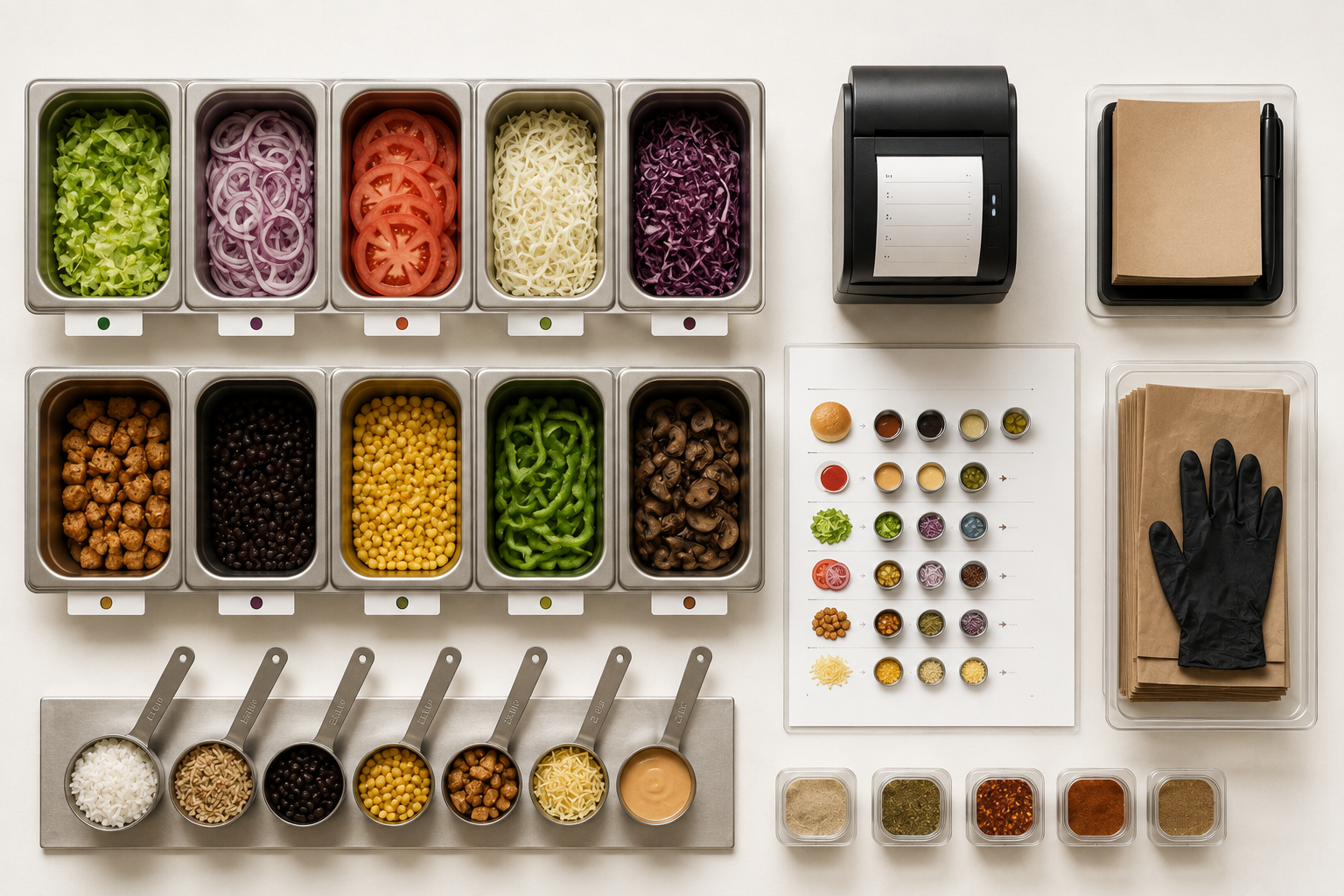
Systems over star chefs. A QSR that depends on one person cooking - or one owner watching - cannot scale. Recipes, portion control, prep processes and station roles have to live inside documented SOPs so quality survives the 50th outlet. This is exactly what let The Croffle Guys, a Shark Tank India qualifier, put five outlets on autopilot and set up to grow past 20 in FY26 without the founder standing in every kitchen.
First-party data. Aggregators hand you orders and keep the customer. The QSRs that last build their own database through apps, loyalty and QR ordering, then run win-back and repeat campaigns off it.
The right format and footprint. Profit is decided on the drawing board - outlet size, kitchen layout, equipment and menu complexity - long before opening day. An oversized kitchen burns rent and CAPEX every month it exists. We pressure-test menus and recipes in our own R&D kitchen before a client ever commits to a build, precisely so those costs are designed out early.
Growth attracts attention. Systems attract serious capital. That is the difference between outlet number two and outlet number two hundred.
Where is QSR growth heading next in India?
The next phase of QSR in India is smaller, smarter and closer to the customer. A few directions worth watching closely:
Cloud kitchens and micro-QSR. Asset-light formats are lowering the cost of entry sharply. The Burger Company's PICO micro-franchise, launched in September 2025, opens at around ₹7.89 lakh in just 80-100 sq ft. Small footprints, delivery-first, lower risk - but only if the concept is validated before it scales.
Concept-led differentiation. In a crowded market, the product is the moat. Leafy Boi, positioned as India's first gourmet veg burger, is a case in point - a sharp hero product built to travel grew roughly 8x past its initial projection and now runs 50+ outlets. Category-defining beats me-too, every time.
Hyperlocal and regional menus. Localisation is not a nice-to-have anymore. Chettinad, tandoori and biryani-led products have driven 8-10% same-store sales lifts in pilot regions. India-first menus win India-first customers.
Faster delivery as a moat. Jubilant's owned-fleet, sub-20-minute delivery let it dodge the aggregator commission trap that squeezed rivals. Speed you control is becoming a real competitive edge.
Consolidation at the top. The proposed Devyani-Sapphire merger, announced in January 2026, signals a maturing sector chasing scale, supply-chain leverage and better unit economics rather than raw store count.
The direction is clear: India's QSR story is far from over. It is simply moving from a land-grab into a profitability game.
Why this matters for your QSR
If you run a QSR - or you are about to open one - the market is on your side. The demand is real, the format is proven, and the runway is long. The risk was never the opportunity. It is building a business that stays profitable while it grows.
That is exactly what we do at DNY Hospitality. We help food entrepreneurs build a QSR properly from concept, scale it into a franchise-ready chain, and sustain the ones that are already running but leaking margin. Over 11+ years and 550+ projects, that has meant everything guests never see - business viability, menu engineering, kitchen design, SOPs, franchise models and full profitability audits - for brands ranging from Yewale Amruttulya (700+ outlets) and The Thick Shake Factory (110+) to turnarounds like WOFL and Arabian Bites. If your product is strong but the business is harder to run than it should be, that is the gap we close. Talk to us before you sign the lease on outlet number two.
Share


Related Blogs

Importance of Restaurant Branding in India & Its Direct Impact on Revenue!
Importance of Restaurant branding in India is taking giant strides. The direction of the food & beverage industry is opening gates to new opportunities.
Kulcha Patola: How a Street Food Became a Scalable QSR Brand
Can a traditional Amritsari kulcha become a viral QSR product? Discover how DNY Hospitality turned a street-style comfort food into a multi-outlet franchise in Punjab with Patakha Pockets and a hub-and-spoke strategy.
KOGO: How We Transformed a Korean–Japanese QSR for Scalable Success
What started as a vision for authentic Korean flavors in Thane became a scalable QSR model with central kitchen systems, a refined menu, and a strong brand identity — built entirely by DNY Hospitality.