7 Profit Lessons From an Award-Winning Restaurant Consultant at FCIC West 2026
2026-07-07
7 Mins Read Mins Read
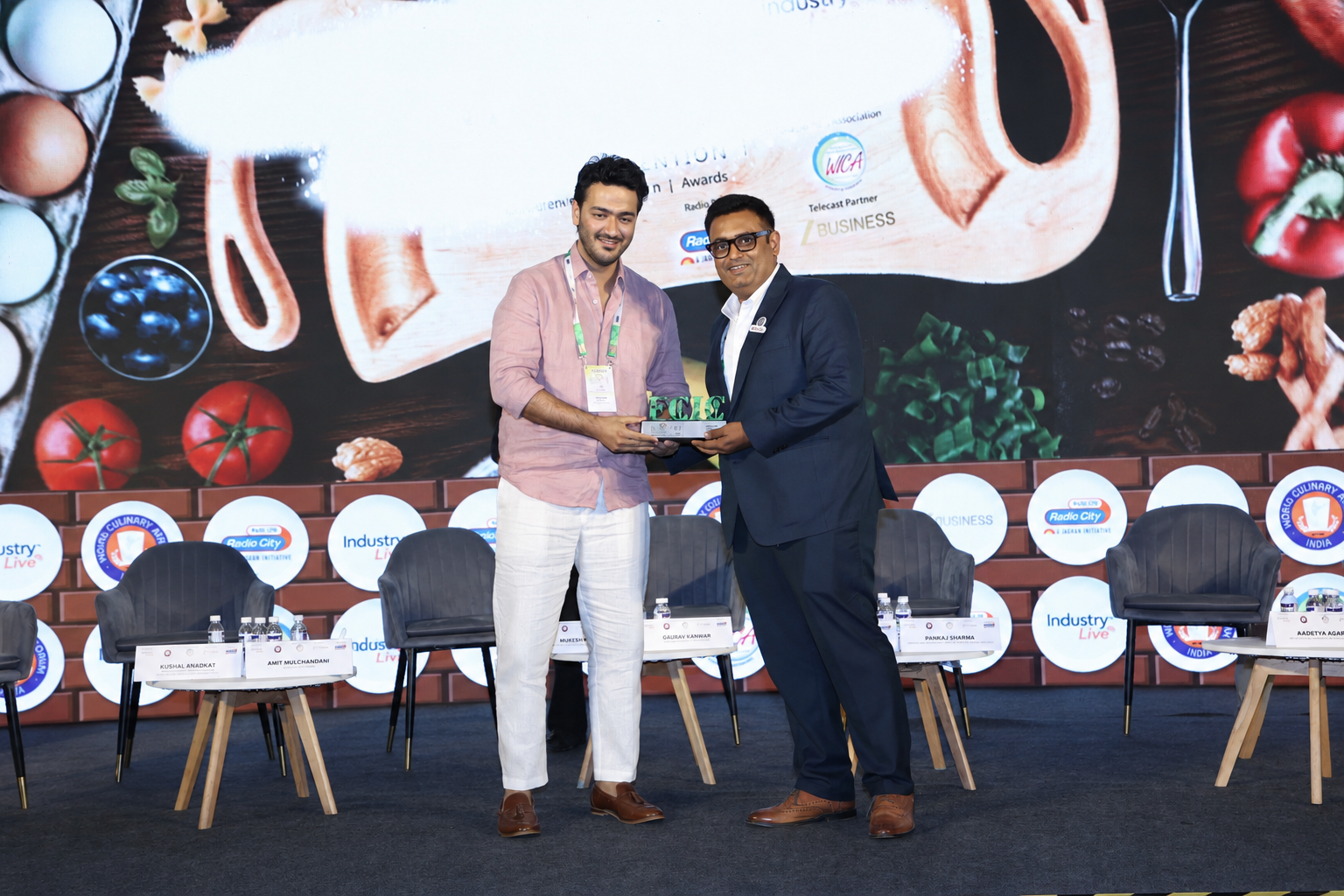
The restaurant consultant on the FCIC stage
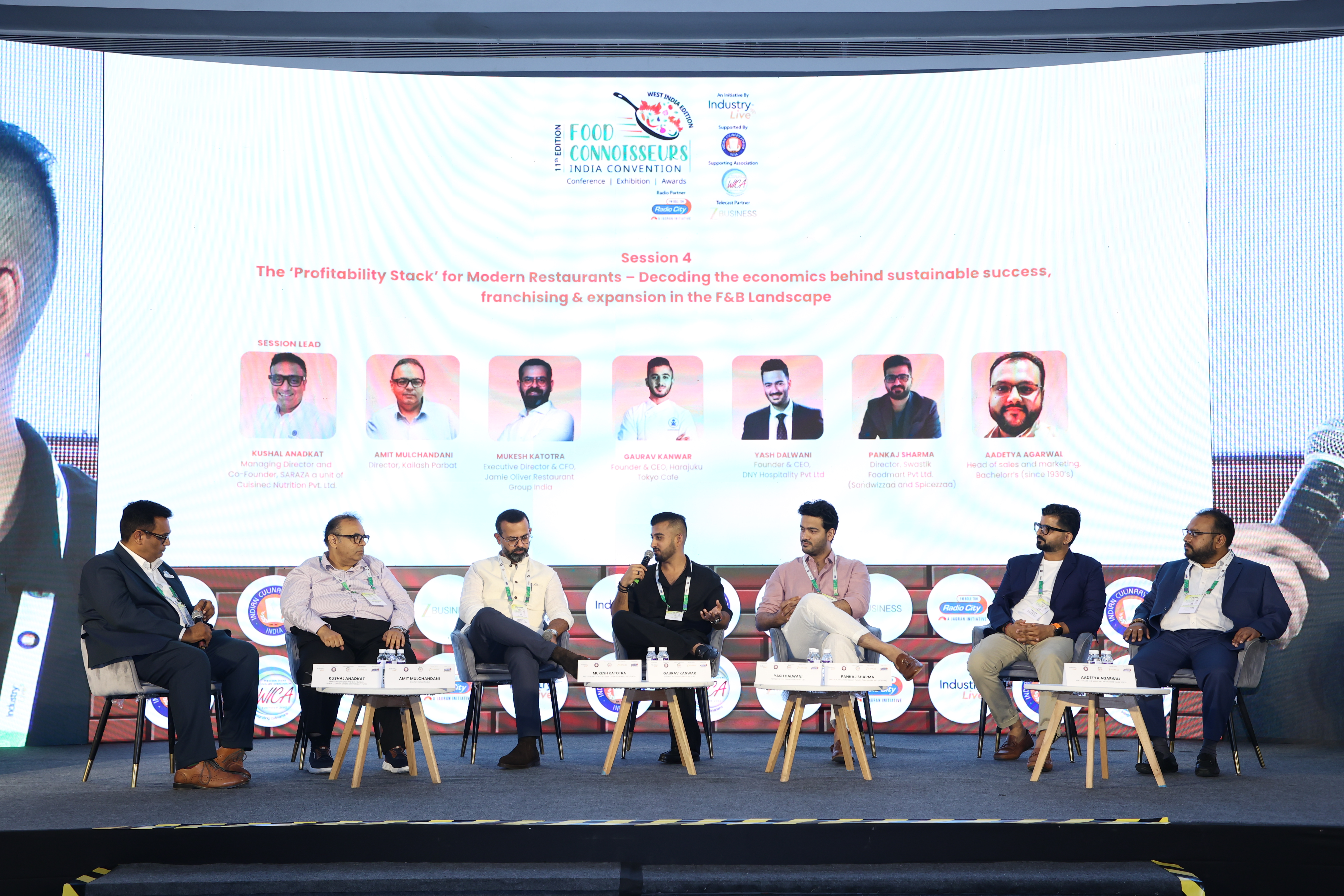
Earlier this month, our co-founder Yash Dalwani took the stage at the Food Connoisseurs India Convention (FCIC) West 2026. The 5th West India edition, an initiative by Industry Live, ran on 11 June 2026 at NESCO Centre, Mumbai. His session carried a sharp title: "The Profitability Stack for Modern Restaurants."
He also walked away with recognition at the Food Connoisseurs India Awards - a proud moment for the whole DNY Hospitality team.
For a restaurant consultant, that room is electric. Restaurateurs, chefs, franchise owners and investors pack it for two days. They debate one hard question: what actually makes a restaurant profitable, scalable and sustainable?
Yash answered it the way we answer it as a restaurant consultant every single day. Here are seven lessons from his talk.
Lesson 1 - Profitability is a stack, not one number
Most owners chase a single figure: food cost. A seasoned restaurant consultant chases the whole stack instead.
Profitability is not one number. It is a stack. A restaurant turns profitable only when many parts click together:
- Menu, manpower and marketing
- Pricing, sourcing and systems
- Format, customer data and the expansion model
Food is the product. The business is the system behind it. A restaurant consultant builds that system on purpose, not by accident.
Lesson 2 - Your menu is financial architecture
Treat the menu as a list and you leave money on the table. Treat it as financial architecture and it starts working for you.
Every item needs a job. A restaurant consultant assigns those roles through menu engineering:
- Hero products that define the brand
- High-margin items that protect profit
- Entry-level products that pull in trials
- Combos and add-ons that lift average order value
- Limited-time drops that create urgency
A huge menu looks generous. It also means more inventory, more waste, slower service and shakier execution. The most profitable menu is not the biggest - it is the one where every dish earns its place and you track contribution margin on each. That is how a restaurant consultant defends margin without raising every price. Want this done for your outlet? See our menu engineering work.
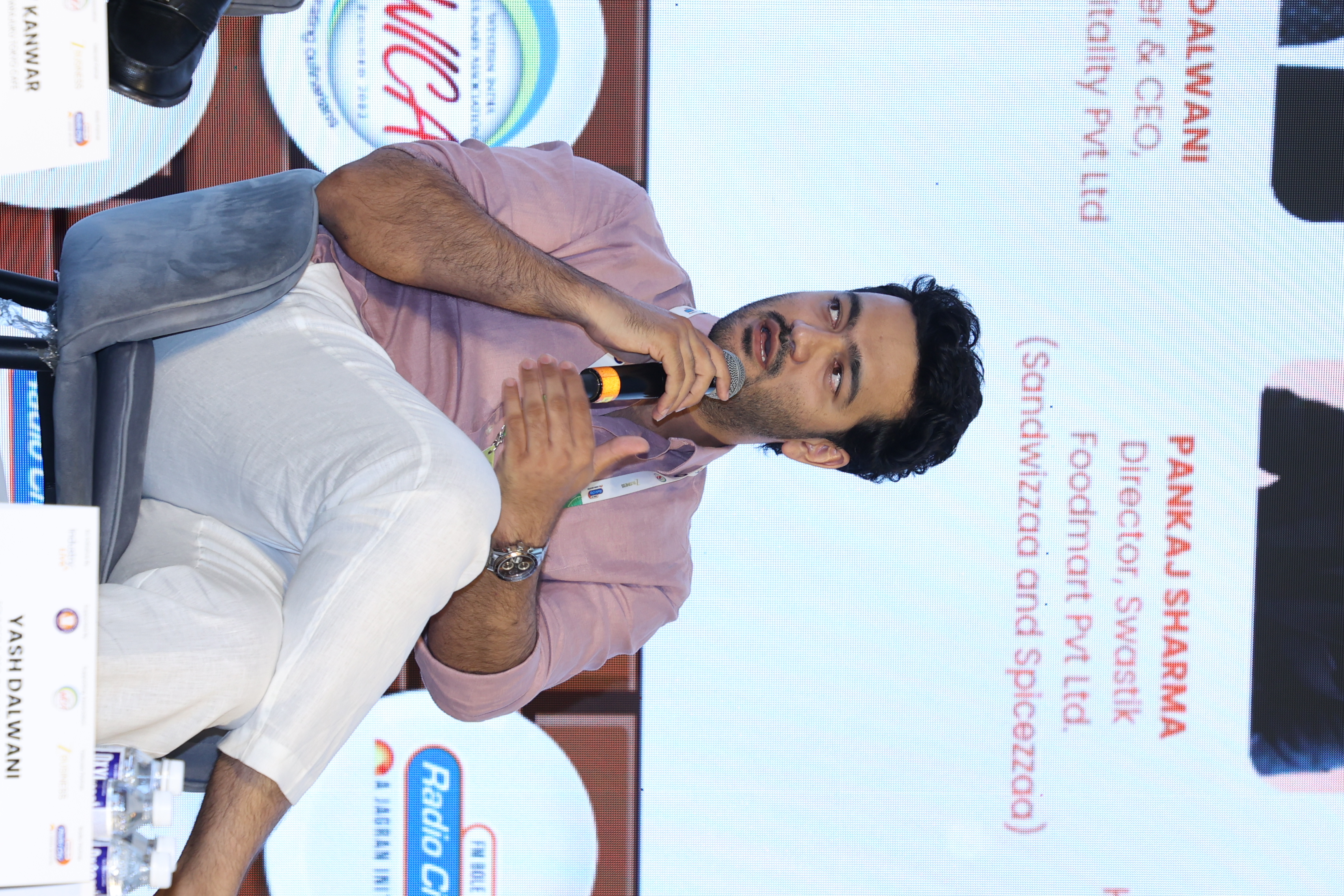
Lesson 3 - Turn your best people into systems
Skilled manpower is the industry's biggest bottleneck. A kitchen that leans on one star chef is fragile. When that chef quits, quality drops overnight.
So the job of a great chef is not to cook forever. It is to convert knowledge into a repeatable system. A restaurant consultant helps owners build:
- Recipe and portion-control SOPs
- Training manuals and defined prep processes
- Kitchen station roles and quality checkpoints
- Tech-led inventory and production controls
A restaurant consultant calls this turning heroes into systems. The most scalable restaurant is not the one with the best chef in every outlet. It is the one where the best chef's knowledge already lives inside the system.
Lesson 4 - Marketing must create business, not noise
Likes feel good. They do not pay rent. Repeat customers do.
A restaurant consultant worth hiring ties marketing to outcomes, not vanity metrics - footfall, trials, repeat visits, higher order frequency and real revenue.
Yash made it hyperlocal:
- An outlet near an office hub should own the lunch moment
- A café near a college should learn student spending habits
- A dessert brand should own festivals, gifting and late-night cravings
National branding builds recall. Hyperlocal marketing builds daily sales.
Lesson 5 - Cost control starts on the drawing board
Most owners start cutting costs only after losses appear. By then it is late.
Profit gets decided long before opening day. As a restaurant consultant, Yash traced it straight back to the plan:
- Outlet size and rent commitment
- Kitchen layout and equipment choice
- Menu complexity and portioning
- Procurement, packaging and pricing
An oversized kitchen burns CAPEX and rent. The wrong equipment kills efficiency. A complex menu drives up inventory and manpower. Profitability is not created in the accounts department. It is created on the drawing board.
Lesson 6 - First-party customer data is the new gold
Many restaurants serve thousands of guests yet barely know them. They see ratings and daily sales - but not who returns, what they spend, or when they quietly stopped coming.
A modern restaurant consultant treats that data as an asset. Build your own database through loyalty programs, QR ordering, reservations, feedback and direct ordering. Then put it to work:
- Repeat-order and win-back campaigns
- Birthday and anniversary nudges
- Referral programs and localized offers
Third-party platforms hand you orders. First-party data hands you a business.
Lesson 7 - Franchising is replication, not expansion
This line landed hardest in the room. One profitable outlet does not make a brand franchise-ready.
Franchising is not expansion. It is replication. Scale a weak model and you simply copy the gaps faster than the profit. Before anyone signs, a restaurant consultant checks for clear franchise-ready signals:
- Proven unit economics across two to three years, not one lucky season
- Documented recipes, SOPs and sourcing systems
- An outlet that runs profitably without the founder inside it daily
New-age investors now ask the same questions - store EBITDA, payback period, founder dependency, SOP maturity. Revenue attracts attention. Systems attract serious capital. Talk to a franchise consultant before you get excited about outlet number two.
Why this matters for your restaurant
FCIC West 2026 was a sharp, well-run room full of people who take the business of food as seriously as the food itself. Thank you to the Food Connoisseurs India Convention and Industry Live for the platform - and the recognition.
If this sounds familiar - a great product, but a business that is harder to run than it should be - that is exactly why DNY Hospitality exists. As a restaurant consultant team, we have spent 11+ years and 550+ projects building the part guests never see, from kitchen design to full profitability audits.
Share


Related Blogs

DNY Hospitality: A Leading Restaurant Consultant
DNY Hospitality takes pride in introducing itself as one of the highly sagacious restaurant consultant in the F&B business.

25 Reasons Why You Need a Restaurant Consultant
Opting for a professional restaurant consultant in the making of your restaurant or food & beverage venture is of high value in the standardisation of your brand.

procurement and liaison
DNY Hospitality is a one-stop solution for your Restaurant consulting & Procurement & Liaison for setup. DNY liaisons with A to Z vendors for procurement of restaurant & hotel supplies.