Why Do 80% of Restaurants Fail? The Real Reasons and Most Common Mistakes
2026-07-21
7 Mins Read

First, some honesty about that 80% number
If you've heard that 80% or even 90% of restaurants fail, you're in very good company - it's one of the most repeated figures in the business. It's also, happily, a good deal kinder than the headline suggests. The often-quoted "nine in ten fail in year one" claim actually traces back to a 2003 American Express commercial rather than any study, and researchers have been gently correcting it ever since.
The more careful numbers are worth knowing. In a well-cited longitudinal study, Professor H.G. Parsa and colleagues found that around 26% of independent restaurants closed in their first year - meaningful, but nowhere near 90%. Over three years the figure rose to roughly 57 to 61%, and US Bureau of Labor Statistics data suggests close to 60% of restaurants close within five years. So the honest picture is this: opening a restaurant is genuinely hard, harder than many first-time owners expect, but it is not a coin flip weighted against you from day one.
We share all of this warmly, as a restaurant consultant team rather than a bearer of bad news. Across 11+ years and 550+ projects at DNY Hospitality, we've noticed something reassuring hiding inside those numbers: most closures don't come from bad luck or bad food. They come from a short list of mistakes that are surprisingly easy to see coming - and, with a little planning, to avoid.
So how many restaurants really fail, and why does the number matter?
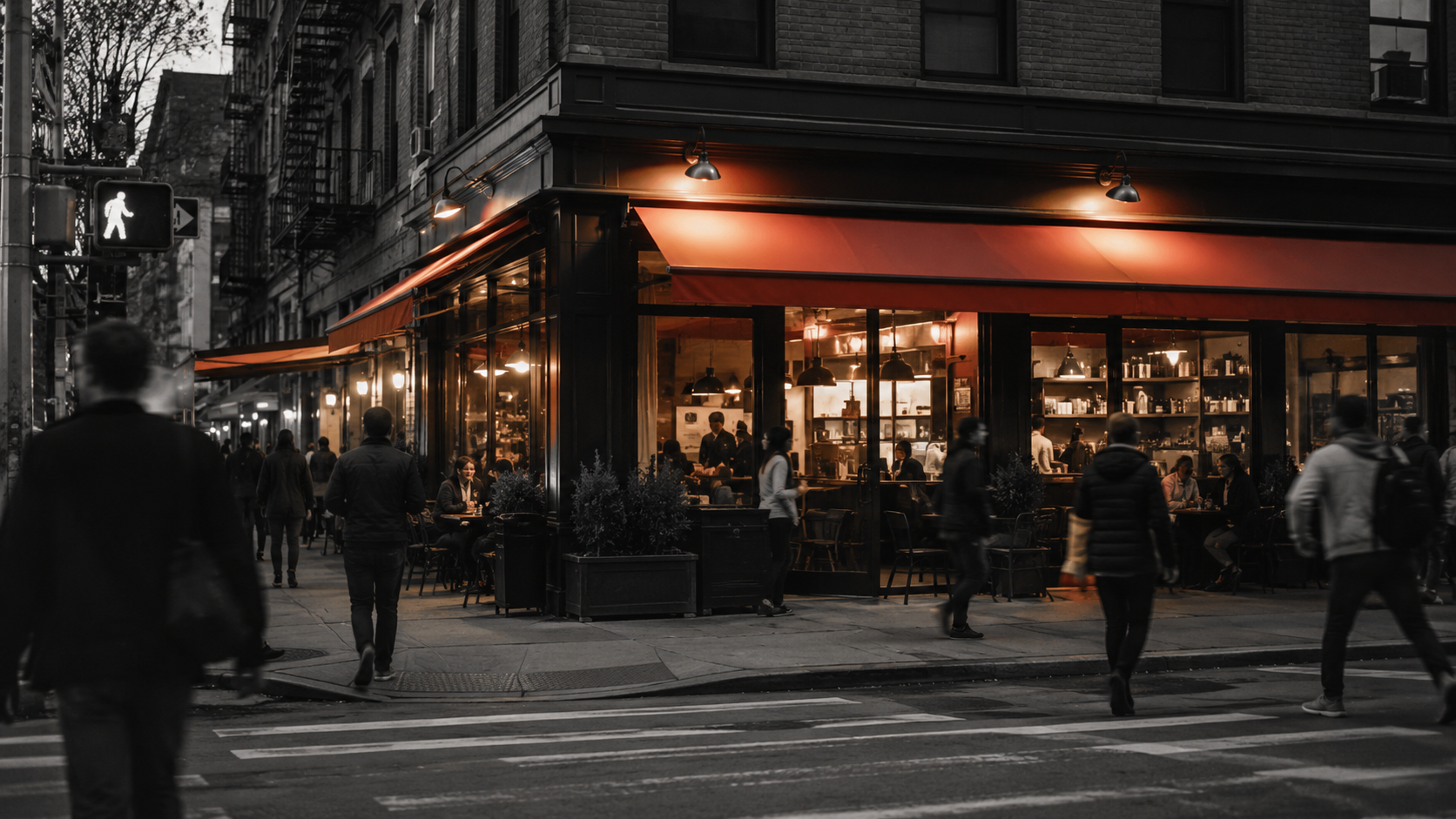
The number that deserves your attention isn't the headline percentage; it's the pattern underneath it. What the research keeps showing is that failures cluster around a handful of repeatable causes, which is genuinely good news - patterns can be planned for.
The Indian picture illustrates this nicely. The market itself is healthy and growing; the country's food-services sector is often projected to cross the $90 billion mark within a few years, and the quick-service segment alone sits near $30 billion in 2026. Yet closures remain common in the toughest corners. In the delivery-only space, industry data suggests 25 to 30% of cloud kitchens shut within their first year, and a National Restaurant Association of India (NRAI) survey found that nearly half of cloud kitchens in Delhi, Mumbai and Bengaluru were running at a loss. A growing market and a struggling operator can happily coexist - which tells us the market is rarely the problem. Execution usually is.
With that in mind, here are the reasons we see most often, and the mistakes that quietly sit behind them.
Reason 1: The numbers never quite worked
The most common cause we see is a business whose economics were fragile before the doors even opened. Restaurant margins are thin by nature - median net profit in the industry often sits below 5% - so there's very little room to absorb a rent that's too high, a menu that's too costly, or a kitchen that's larger than it needed to be.
The mistake underneath it is usually timing. Many owners start looking closely at costs only once losses appear, by which point the big decisions are already fixed. Profit is really decided much earlier, on the drawing board: the size of the space, the rent commitment, the equipment, the portioning, the pricing. A gentle habit that helps enormously is tracking profitability item by item, not just as a monthly average. A cloud kitchen earning a healthy-looking number of orders can still lose money on each one once a 20 to 30% aggregator commission, food cost and packaging are taken out - and owners who don't watch item-level margins often discover it only at month-end. This is exactly the ground a [restaurant profitability audit](#) is designed to cover, ideally before the lease is signed.
Reason 2: The location was quietly working against them
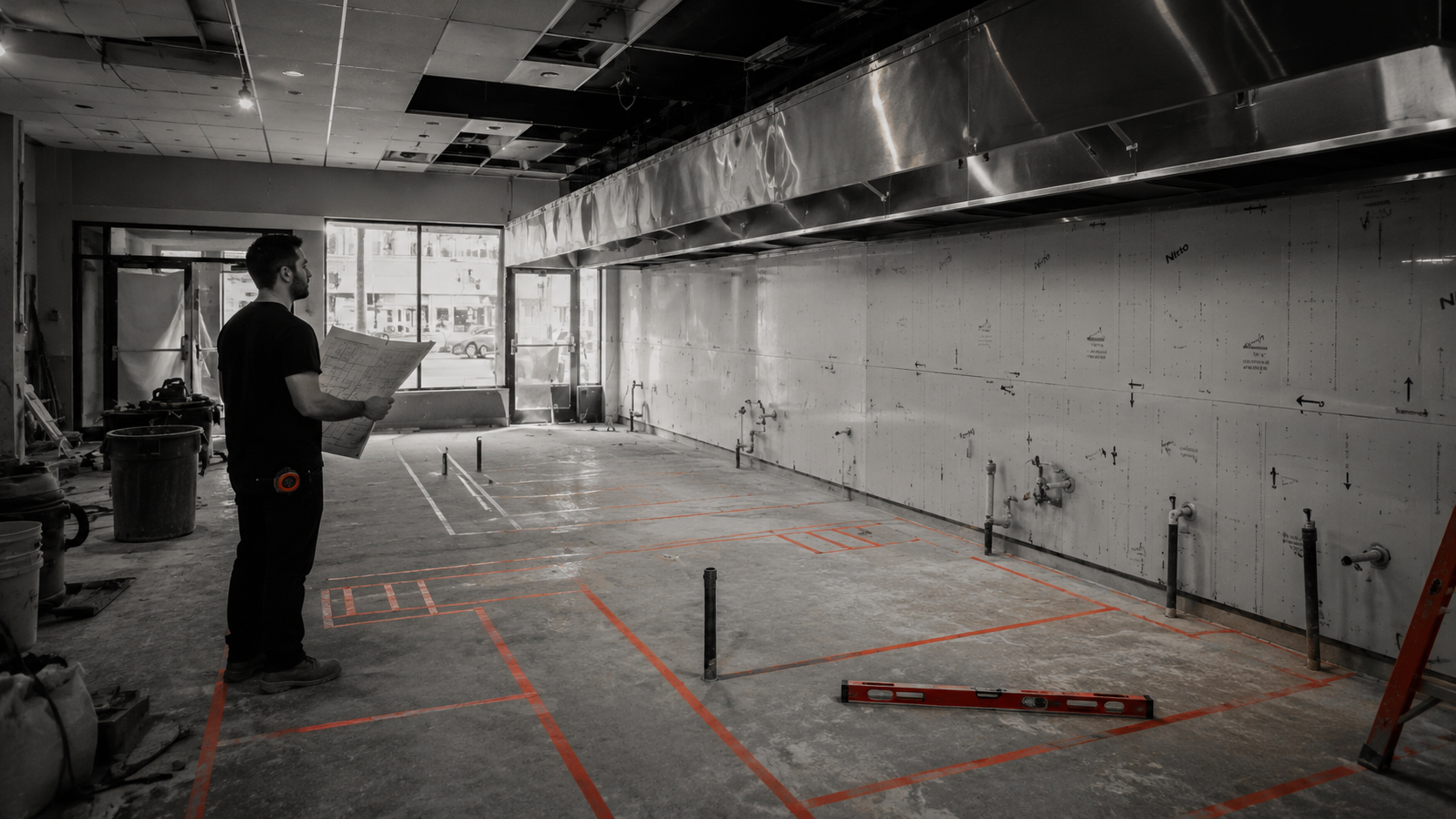
Location is one of the strongest predictors of early closure, and it's a decision that's very hard to undo later. The NRAI's 2023 industry report found that 38% of independent owners pointed to poor location and limited parking as a primary reason for their financial struggles. Parsa's research adds a useful nuance: in areas crowded with more than 20 restaurants per square mile, failure rates ran about 25% higher, and outlets in low-visibility, low-footfall spots closed far sooner than those in busy, well-seen positions.
The mistake here is usually choosing a site on instinct or on an attractive rent, rather than on how well the catchment fits the concept. A wonderful dessert brand in a quiet office lane, or a lunch-focused format tucked away from any daytime crowd, can do everything else right and still struggle. It's worth being patient and a little methodical about this one - the difference between a thriving outlet and a draining one is often just the address.
Reason 3: They rented their demand instead of owning it
Delivery platforms are a genuine gift for reach, but leaning on them entirely is a common and costly trap. For many delivery-first operators, the great majority of revenue - sometimes 85% or more - flows through Swiggy and Zomato, and those orders arrive with commissions and fees that can quietly claim a quarter to a third of the order's value. When that's your only channel, you're renting your customers rather than building a relationship with them.
The gentler, sturdier approach is to treat aggregators as one channel among several, and to steadily build your own first-party customer data alongside them - through loyalty, direct ordering, QR menus and feedback. That owned relationship lets you welcome guests back with care rather than paying to reach them again each time. Platforms bring valuable footfall; your own data builds a business you can actually steer.
Reason 4: The menu tried to please everyone
An oversized menu looks generous but often works against the kitchen. Long menus tend to increase inventory, raise wastage, slow service and make consistency harder - all of which press on those already-thin margins. It's one of the most common and most fixable mistakes we come across.
The kinder version for both guests and the kitchen is a focused menu where every dish has a clear job: some define the brand, some protect the margin, some invite first-time trials. A delivery kitchen, for instance, often does beautifully launching with just 8 to 12 items in one cuisine, watching what genuinely sells over a couple of months, and then growing the menu from that real data rather than from personal favourites. Thoughtful [menu engineering](#) tends to lift profit without raising a single price.
Reason 5: The whole thing rested on one person
Many restaurants are, in effect, one talented person working extremely hard - usually the founder, or a single star chef. It's admirable, and in the early days it's how most great places begin. It becomes a risk when quality, costs and consistency all live in that one person's head, because the moment they step back, or simply tire, standards can slip.
The mistake isn't the talent; it's leaving the talent undocumented. The reassuring fix is to turn that knowledge into simple, repeatable systems - recipes, portion controls, prep processes, station roles and quality checks - so excellence becomes teachable rather than personal. Owners are often surprised how much calmer the business feels once the founder is no longer the single point of failure. We fondly call this turning heroes into systems.
Reason 6: Good people arrived, but didn't stay
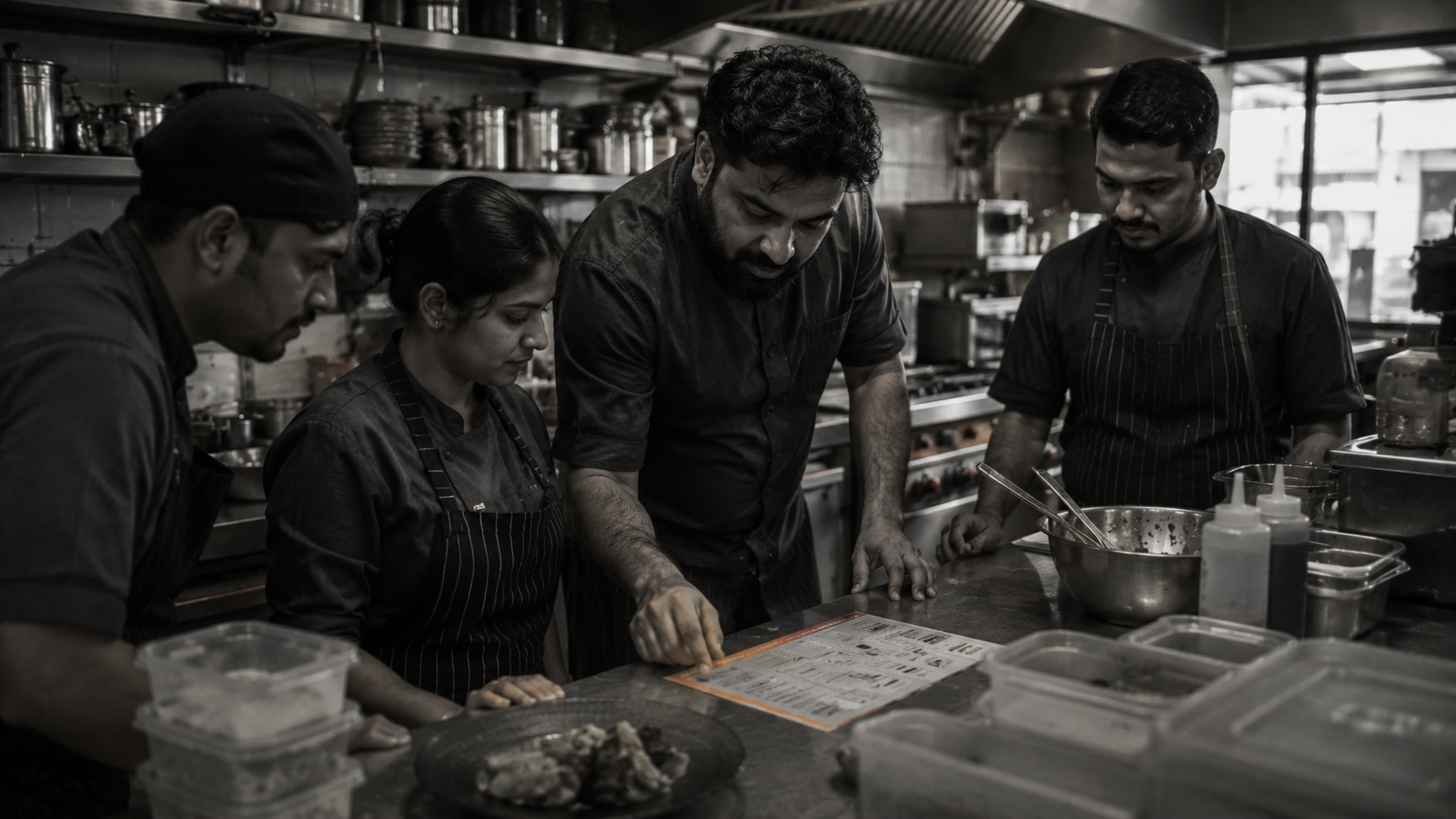
Staffing is the industry's quietest strain, and high turnover is a common thread through struggling restaurants. Constant churn raises hiring and training costs, wears down service quality and slowly erodes the guest experience. Researchers have long noted that the demanding rhythm of restaurant life - busiest exactly when everyone else is off - is itself a major factor in owners and staff burning out.
The mistake is usually treating people as a cost to minimise rather than a system to build. A little structure goes a long way: clear roles, a simple training path, fair scheduling and a workplace people don't want to leave. A well-trained, settled team is one of the most dependable predictors of a restaurant that lasts.
Reason 7: They grew, or spent, faster than the model was ready for
The last common pattern is a happy problem turned painful - expanding, or spending, ahead of what the model could support. Opening a second and third outlet before the first is genuinely repeatable tends to copy the gaps faster than the profit. And because startup costs are heavy and margins are slim, running low on working capital is a frequent, avoidable cause of closure, even for outlets that were doing fine.
The steadier path is to prove one outlet works profitably without the founder in the room, keep a comfortable cash cushion for the slow early months, and let the systems catch up before the store count runs ahead. Growth is wonderful when the foundations are ready to carry it, and it's worth chatting with a [franchise consultant](#) before outlet number two becomes real.
The encouraging part
Read back over those seven reasons and you'll notice something hopeful: almost none of them are about luck, and almost all of them are visible well in advance. Shaky economics, the wrong address, over-reliance on one channel, a bloated menu, founder dependency, staff churn and growing too soon - each one leaves early signs, and each one responds to planning. That's a far more encouraging story than "80% fail," because it means the outcome is largely in your hands.
If you have a concept you believe in and simply want a calm, experienced pair of eyes on the risks before they become expensive, that's precisely the work DNY Hospitality was built for. As a restaurant consultant team with 11+ years and 550+ projects behind us, we quietly help owners build the part guests never see - from profitability audits and kitchen design to menu engineering and expansion planning. Whenever you'd like a friendly second opinion, we'd be genuinely glad to [talk it through with you](#).
*A quick note: restaurant failure and closure can be a stressful, personal subject for owners living through it. The figures above are drawn from published studies and industry surveys and are meant to encourage careful planning, not to alarm - and every one of these challenges is one we've seen owners work through.*
Share


Related Blogs

DNY Hospitality: A Leading Restaurant Consultant
DNY Hospitality takes pride in introducing itself as one of the highly sagacious restaurant consultant in the F&B business.

25 Reasons Why You Need a Restaurant Consultant
Opting for a professional restaurant consultant in the making of your restaurant or food & beverage venture is of high value in the standardisation of your brand.

procurement and liaison
DNY Hospitality is a one-stop solution for your Restaurant consulting & Procurement & Liaison for setup. DNY liaisons with A to Z vendors for procurement of restaurant & hotel supplies.