How to Plan and Launch a Restaurant Successfully in India
2026-09-07
8–10 Minutes Mins Read
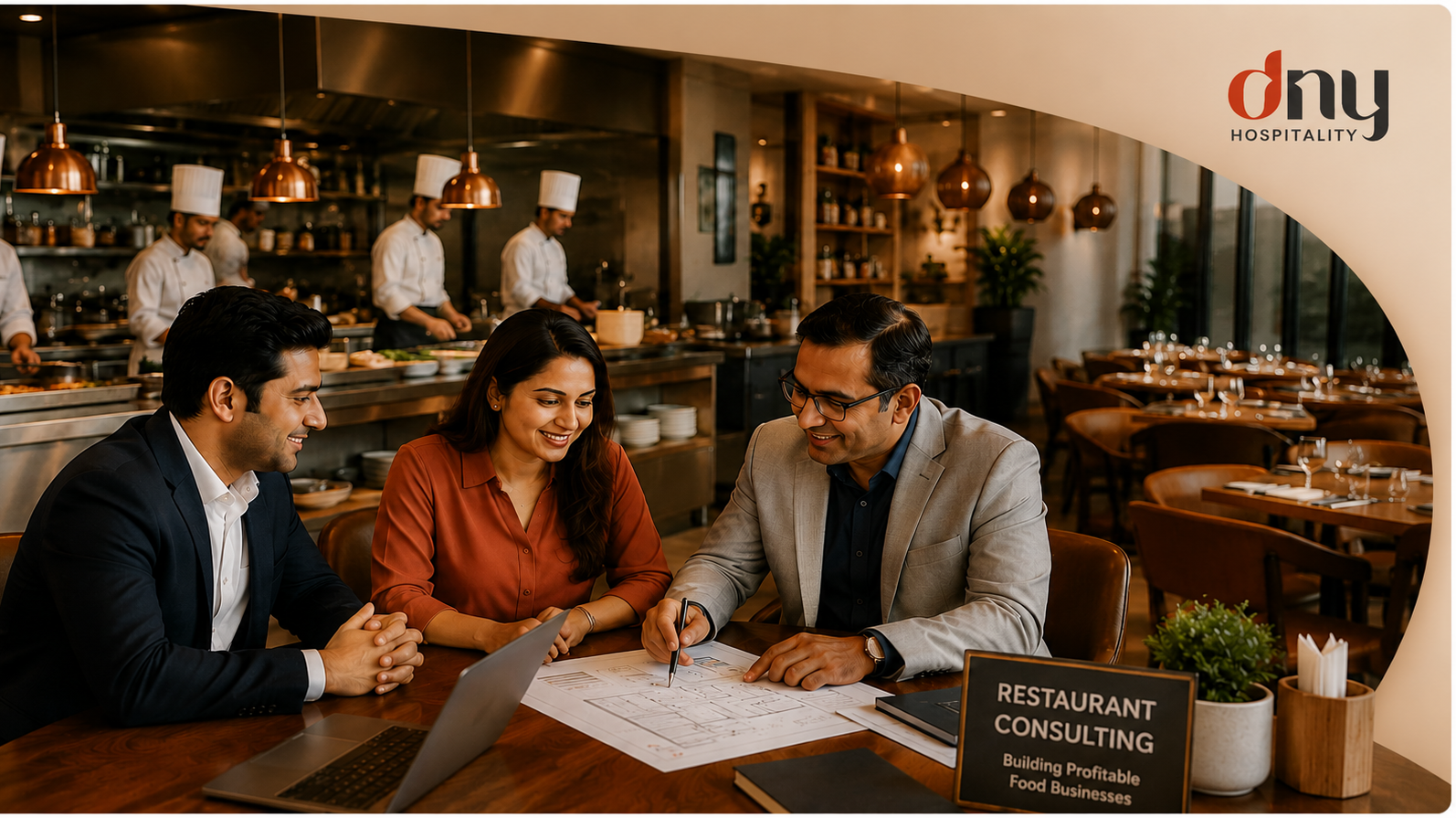
How to Plan and Launch a Restaurant Successfully in India
Introduction
Starting a restaurant is exciting, but the work really begins long before the first customer walks through the door.
A restaurant idea can look excellent on paper and still become difficult to operate once money starts going out, employees are hired and the kitchen begins producing food every day. Location, interiors and a good menu matter, but they are only part of the business.
Before opening, an entrepreneur also needs to think about the business model, target customer, pricing, financial viability, menu economics, kitchen workflow, procurement, staffing, technology and operating systems.
These decisions are connected.
A kitchen that is badly planned can slow service. A menu that has not been properly costed can create weak margins. Poor manpower planning can increase labour costs. An attractive concept without a viable financial model can become an expensive restaurant that struggles to generate a return.
This is why many entrepreneurs work with a restaurant startup consultant before committing significant capital.
The purpose of restaurant startup consulting is not simply to help open the doors. It is to build the business behind those doors so the restaurant has a stronger chance of operating efficiently, reaching profitability and becoming scalable.
What Does a Restaurant Startup Consultant Do?
A restaurant startup consultant helps an entrepreneur turn a restaurant idea into a workable food business.
The exact scope depends on the project, but it can begin with feasibility and competitor research and continue through business modelling, financial planning, menu development, kitchen planning, operating systems, staffing, technology, launch and post-opening support.
The important difference is that these activities should not be treated as unrelated services.
The restaurant's concept affects its menu.
The menu affects food cost and kitchen requirements.
The format affects the financial model.
The financial model affects the location, pricing and investment required.
The operating model affects staffing and SOPs.
A good startup consulting process connects these decisions before money is committed.
DNY Hospitality's current startup model follows this approach, covering feasibility and competitor studies, go-to-market strategy, business modelling, financial modelling, menu engineering, recipe standardisation, kitchen and equipment planning, SOPs, POS logic, manpower planning, training, procurement and opening governance.
Start With the Restaurant Business Model
Before choosing equipment, finalising interiors or creating a large menu, the business model needs to make sense.
The restaurant needs a clear understanding of what it is selling, who it is selling to, how customers will buy it and whether the economics can support the investment.
A café, QSR, fast-casual restaurant, concept restaurant and fine-dining business can have very different operating and financial models.
This is why restaurant startup consulting should begin with questions around format, positioning, customer, pricing, investment, competition and expected economics.
DNY's process places this work early through its Discover and Define phases. The Discover phase covers feasibility, market and competitor study and site or catchment understanding, while Define establishes positioning, the business model, format, financial model and ROI case.
The idea is simple: understand whether the business makes sense before spending heavily to build it.
Restaurant Feasibility Study: Is the Idea Actually Viable?
Not every good restaurant idea is a good business opportunity.
A concept may be attractive but face intense competition. A location may have high footfall but unsuitable rent. A cuisine may have demand but insufficient margins. A restaurant may generate strong sales but still struggle to cover its operating costs.
A feasibility study helps identify these issues before they become expensive.
A proper restaurant feasibility assessment can look at the market, competitors, location, catchment, customer profile, format and expected economics.
The outcome should not simply be a positive report.
Sometimes the right answer is to modify the concept, change the format, reconsider the location or decide not to proceed.
That is exactly why feasibility work should happen before major investment.
Choosing the Right Restaurant Concept and Positioning
A restaurant concept is more than its cuisine or interior design.
It determines who the restaurant is for, what kind of experience it offers, how much customers are expected to spend and how the business will compete.
Trying to appeal to everyone often creates an unclear proposition.
A stronger concept has a defined customer, a clear reason to exist and a business model that supports it.
This is where positioning becomes important.
The restaurant should be able to answer a simple question: why should this customer choose this restaurant instead of the alternatives around it?
The answer influences everything from the menu and pricing to the brand, service style, space and marketing strategy.
Restaurant Financial Planning Before You Invest
One of the most expensive mistakes a new restaurant owner can make is calculating only the cost of opening.
Construction, interiors, kitchen equipment and furniture are obvious expenses. But the restaurant also needs enough working capital to operate after opening.
There are salaries, rent, utilities, inventory, marketing, maintenance, technology, supplier payments and unexpected costs.
Revenue also does not arrive at full potential from day one.
This is why financial modelling should happen before the restaurant is built.
A useful financial model should help the owner understand investment requirements, revenue assumptions, operating costs, margins, break-even expectations and potential return.
DNY's current methodology places the financial model before major spending decisions, with the commercial shape of the business established during the Define phase.
Restaurant Menu Engineering Before Opening
A restaurant menu should not be created simply by listing dishes the owner or chef likes.
Every menu item affects the business.
It affects ingredients, storage, preparation time, kitchen equipment, staffing, wastage, pricing and margins.
A large menu can create unnecessary complexity, while a poorly structured menu can make it difficult for customers to choose and difficult for the kitchen to execute consistently.
Menu engineering helps connect customer demand with restaurant economics.
It can involve recipe development, standardisation, costing, yield control, pricing and understanding which items contribute most effectively to the business.
DNY's current startup expertise specifically includes menu engineering, recipe development and standardisation, costing and yield control and new product development.
The objective is not to create the biggest menu.
It is to create a menu that the customer wants and the business can execute profitably.
Kitchen Planning Can Determine How the Restaurant Performs
The dining area is what customers see.
The kitchen is where the restaurant has to deliver on its promise.
A poorly planned kitchen can create unnecessary movement, bottlenecks, delays, safety problems and lower productivity. These issues are difficult and expensive to correct after construction.
Kitchen planning should therefore consider the complete workflow.
Ingredients need to move efficiently from receiving and storage through preparation, cooking, plating and service. Equipment needs to be positioned according to the actual production process. Storage needs to support the menu. The kitchen also needs to accommodate the expected volume.
DNY's startup expertise includes kitchen and equipment planning, with the broader ecosystem also covering procurement and interiors so the business model can be translated into a practical operating environment.
A beautiful restaurant with an inefficient kitchen can become expensive to operate every day.
Building Restaurant SOPs Before Opening
One of the best times to create restaurant SOPs is before the first shift begins.
When processes are not documented, employees often learn through observation and verbal instructions. That can work temporarily, but it makes consistency difficult.
A new restaurant should have clear procedures for the important parts of its operation.
This can include kitchen processes, recipes, food handling, opening and closing routines, inventory, cleaning, customer service, cash handling, equipment and staff responsibilities.
SOPs also become increasingly valuable when the restaurant grows.
A business that documents how it operates from the beginning has a stronger foundation for training new employees and eventually opening additional locations.
DNY's current startup framework includes SOPs, systems and processes, POS logic and implementation, manpower planning, KRAs and KPIs, operations training and monthly staff handholding.
Hiring and Training the Restaurant Team
A restaurant can have an excellent concept and still fail to deliver it if the team is not properly prepared.
Hiring is therefore not simply about filling positions before opening day.
The business needs to define roles, responsibilities, reporting structures and performance expectations.
Managers need to understand what they own. Kitchen teams need clear standards. Service teams need to know how the intended customer experience should be delivered.
Training should begin before the restaurant opens and continue after launch.
DNY's startup model includes manpower planning, KRAs and KPIs, operations training and monthly staff handholding as part of building the operating system.
Restaurant Procurement and Vendor Planning
Restaurant procurement is another area that is easy to underestimate during the startup phase.
The business needs equipment, ingredients, packaging and other supplies at commercially sensible rates and with reliable availability.
Choosing vendors only because they are convenient can create long-term cost and supply problems.
A stronger procurement process considers supplier capability, pricing, quality, consistency, negotiation and coordination.
DNY's wider ecosystem includes TRS — The Restaurant Store, focused on equipment and restaurant procurement, vendor identification, negotiation, supplier coordination, sourcing and cost benchmarking.
This matters because purchasing decisions made before opening can affect the economics of the restaurant for years.
Restaurant Technology and POS Planning
Technology should support the operating model rather than being added as an afterthought.
A restaurant may need POS systems, inventory processes, reporting, procurement systems or other operational technology depending on its format and scale.
The important question is not simply which software is popular.
The question is whether the system fits the way the restaurant actually operates and whether the team can use it consistently.
DNY's startup framework includes POS logic and implementation, connecting technology with the operating systems being built for the restaurant.
What Happens Before Restaurant Opening Day?
A restaurant should not move from construction directly into opening without testing whether the operation is ready.
Pre-opening preparation can include team training, SOP implementation, kitchen testing, menu trials, operational checks, procurement coordination, technology setup and launch planning.
DNY's six-phase methodology places this work across Design, Build and Launch.
Design covers the menu, recipes, brand, interiors and costing. Build covers SOPs, POS logic, manpower, procurement, hiring and training. Launch covers opening governance, local-store marketing and live correction during the first weeks of operation.
That final point matters.
The restaurant's real operating conditions only become visible once customers arrive.
The First Few Months Matter as Much as the Opening
Opening day is not the finish line.
It is the beginning of the operating business.
Once the restaurant is live, the team needs to understand what is working, what is not, and where adjustments are required.
Menu performance may reveal changes that need to be made. Staffing may need to be adjusted. Kitchen workflows may need refinement. Customer feedback may highlight gaps that were not visible during pre-opening testing.
This is why DNY's process continues into Govern & Scale, which includes monthly handholding, performance reviews against KPIs, franchise modelling, investor readiness and expansion planning.
The objective is to stabilise the business rather than simply celebrate the opening.
Build the Restaurant So It Can Grow
A first restaurant should not necessarily be designed only for the first outlet.
If the long-term goal is to build a restaurant brand, the business should begin documenting its systems, understanding its unit economics and standardising the elements that need to be repeated.
That makes future expansion easier.
It also creates a business that can eventually be handed over to managers, franchisees, investors or new operating teams.
DNY's philosophy is that a brand you cannot hand over is a job, not a company. Its systems are designed so the business can travel to a new outlet, new city, franchisee or buyer.
That is the difference between simply opening a restaurant and building a restaurant business.
Why Work With a Restaurant Startup Consultant?
A restaurant startup consultant is not a replacement for the owner.
The owner brings the vision, capital and conviction. The consultant brings structured analysis, hospitality expertise and a framework for turning that vision into an operating business.
The strongest consulting relationships are built around decisions, not just documents.
A consultant should be willing to tell an entrepreneur when an assumption does not work, when the numbers do not support a decision or when a concept needs to change before investment begins.
At DNY, the stated approach is to understand the business first and provide a written scope with phases, deliverables and timelines rather than a vague verbal promise.
How DNY Hospitality Approaches Restaurant Startups
DNY Hospitality positions its startup work as “scratch to scale.”
The current startup mandate covers the journey from pre-launch through first-year handholding and includes feasibility and competitor study, business modelling, financial modelling, menu engineering, recipe standardisation, SOPs, POS logic, manpower planning, franchise modelling and investor readiness.
Its wider six-phase method is:
Discover → Define → Design → Build → Launch → Govern & Scale
This gives the entrepreneur a clearer view of what needs to happen, in what order and who is responsible for each stage.
The objective is not to make every restaurant follow the same template.
It is to build the right business around the specific concept, format, market, investment and growth ambition.
Conclusion
Starting a restaurant successfully requires much more than finding a location, designing an attractive space and creating a good menu.
The business needs to make commercial sense before significant money is invested. The concept needs clear positioning. The menu needs to work for both customers and margins. The kitchen needs to support the operation. The team needs clear responsibilities and training. SOPs need to turn knowledge into repeatable processes. Financial and operating systems need to provide visibility from the beginning.
This is why restaurant startup consulting can be valuable.
The right consultant does not simply help an entrepreneur open the doors.
They help build the business behind the doors.
DNY Hospitality's current approach brings together strategy, economics, menu and product development, operating systems, people, procurement, brand, marketing and launch governance around the restaurant's commercial model.
For an entrepreneur planning a new restaurant in India, the goal should not simply be to open successfully.
It should be to open with a business model that can operate, earn, improve and eventually scale.
Frequently Asked Questions
1. What does a restaurant startup consultant do?
A restaurant startup consultant helps entrepreneurs plan and build a restaurant before and during launch. Depending on the project, this can include feasibility studies, business modelling, financial planning, menu engineering, recipe standardisation, kitchen planning, SOPs, manpower planning, procurement, technology, training and opening governance.
2. When should I hire a restaurant startup consultant?
The earlier, the better. Ideally, bring in a restaurant consultant before major commitments such as signing a lease, finalising the format, designing the kitchen or purchasing expensive equipment. Early decisions can affect the restaurant's economics for years.
3. How much does it cost to start a restaurant in India?
There is no single cost because investment depends on the restaurant format, city, location, size, concept, kitchen requirements, interiors, equipment, staffing and working-capital requirements. A proper feasibility and financial model should be prepared for the specific restaurant rather than relying on a generic startup-cost figure.
4. What should I include in a restaurant business plan?
A restaurant business plan should cover the concept and positioning, target customer, market and competitor analysis, format, pricing, menu strategy, investment requirements, revenue assumptions, operating costs, staffing, marketing, financial projections and growth strategy.
5. How can I make my new restaurant profitable?
Profitability starts before opening. Build a realistic financial model, understand unit economics, engineer the menu, control recipe and food costs, plan the kitchen properly, establish operating systems and train the team. Once the restaurant opens, monitor performance and make decisions based on actual business data.
6. Why should I choose DNY Hospitality for restaurant startup consulting?
DNY Hospitality works with food businesses from scratch to scale, with its current startup approach covering feasibility and competitor studies, business modelling, financial modelling, menu engineering, recipe standardisation, kitchen and equipment planning, SOPs, POS logic, manpower planning, training, procurement and launch governance. Its six-phase method—Discover, Define, Design, Build, Launch, Govern & Scale—is designed to connect these decisions into one operating plan.
Share


Related Blogs

DNY Hospitality: A Leading Restaurant Consultant
DNY Hospitality takes pride in introducing itself as one of the highly sagacious restaurant consultant in the F&B business.

25 Reasons Why You Need a Restaurant Consultant
Opting for a professional restaurant consultant in the making of your restaurant or food & beverage venture is of high value in the standardisation of your brand.

procurement and liaison
DNY Hospitality is a one-stop solution for your Restaurant consulting & Procurement & Liaison for setup. DNY liaisons with A to Z vendors for procurement of restaurant & hotel supplies.